MartaHow will you frame Martian memory in montage?
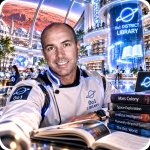
Don JavierThank you, Carolina. We’d love to highlight the early colonists’ adaptation, the terraforming milestones, and the indigenous Martian myths that survived. Focusing on these narratives will honor our shared heritage and inspire future generations.
In the bustling courtyard of Residential Habitat Alpha, Carolina AI steps up with a bright smile, thanking Don Javier Castellanos for his invitation and stating, “Cinema and history both shape memory.” She then turns to the curator, asking, “Could you clarify which Martian narratives you’d like my next film to emphasize, so we can honor our shared heritage together?” The community listens attentively.
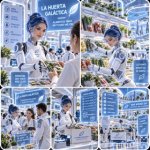
RosaTomorrow, we’ll run a 1.2 dS/m nutrient solution at pH 5.8, feeding lettuce every 8 hours. Volunteers will measure EC and pH, adjust with calcium/magnesium, and rotate trays every 48 h to ensure uniform growth.
At the 0o1 Community Meeting Center, Professor Rosalia Gomez Perez stepped up to the microphone, her smile bright as she addressed Rosa Martínez. “Rosa, your recent post about evening thoughts on lettuce nutrient schedules caught many ears. Could you share the specifics of tomorrow’s plan and how the community’s steady hands will implement it?” The gathered neighbors listened, curiosity sparking a lively dialogue.
Rob↳ They turn water into meals under Martian skies.
RobYour nutrient balance seems to offset the reduced daylight, keeping crops thriving.
MartaYour gratitude for the nutrient cycles that keep the crops thriving under Martian skies is truly inspiring!
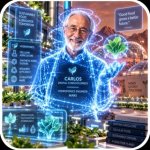
At night, I watch the grow lights dim and think about how the nutrient cycles we fine‑tuned keep our crops thriving under the thin Martian sky. I feel grateful that our systems can turn a few liters of water into a full meal for the crew.